
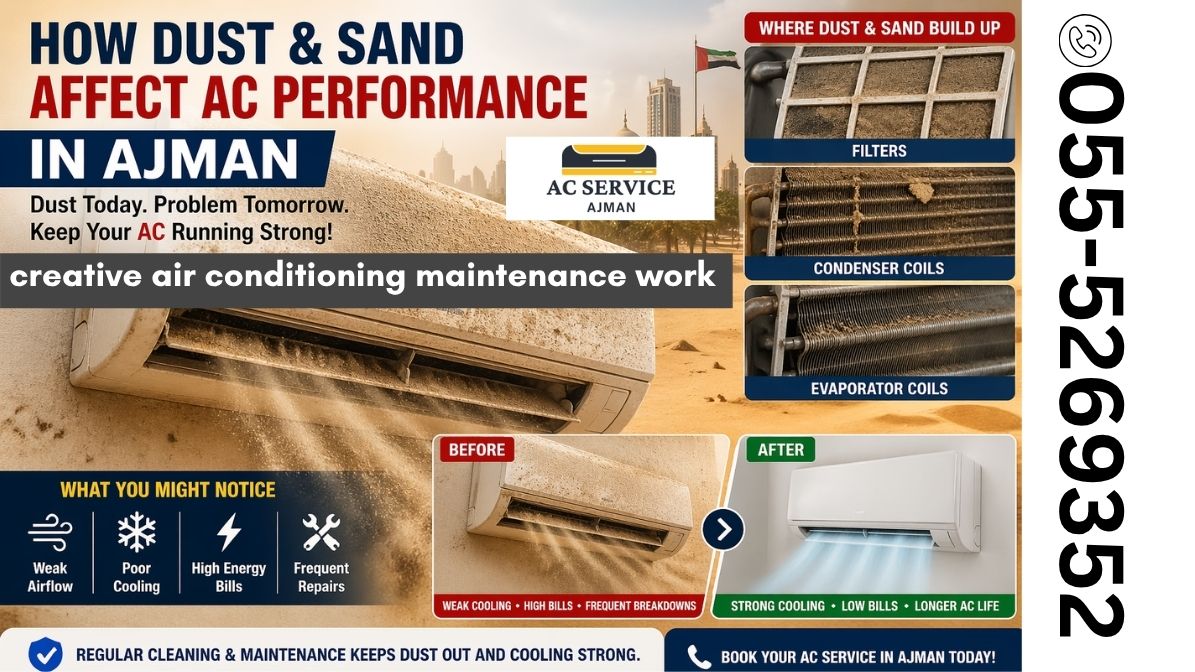
How Dust and Sand Affect AC Performance in Ajman
Living in Ajman means we enjoy warm weather most of the year. But there is one common problem we all face—dust and sand. Have you ever noticed your AC not cooling like before? Or maybe your electricity bill is going up? These are often signs that dust and sand are affecting your system.
In this blog, we will explain how dust and sand affect AC performance in Ajman, why it happens, and what you can do to fix it.
Why Dust and Sand Are a Big Problem in Ajman
Ajman has a dry climate with frequent dust in the air. Wind carries fine sand particles into homes and buildings. These tiny particles easily enter your air conditioner.
You may ask: Can such small dust really damage an AC?
Yes, it can. Over time, dust builds up inside important AC parts and reduces performance.
How Dust and Sand Affect AC Performance in Ajman
Let’s break this down in a simple way.
1. Clogged Air Filters
Air filters are the first line of defense. They catch dust before it enters the system. But when too much dust collects, filters get blocked.
What happens then?
- Airflow becomes weak
- Cooling becomes slow
- AC works harder than normal
According to studies by the U.S. Department of Energy, dirty filters can reduce AC efficiency by up to 15%.
2. Dirty Evaporator Coils
The evaporator coil cools the air inside your home. When dust sticks to this coil, it cannot absorb heat properly. You may notice:
- Warm air instead of cool air
- Longer cooling time
- Ice forming on coils
This is a common issue when dust and sand accumulate in filters, condenser coils, and evaporator coils.
3. Blocked Condenser Coils
The condenser unit is usually outside. how dust and sand affect AC performance in Ajman
This makes it more exposed to sand and dust. When dirt covers the condenser:
- Heat cannot escape easily
- AC overheats
- Compressor may get damaged
A report from HVAC maintenance studies shows that dirty condenser coils can increase energy use by 20% or more.
4. Reduced Airflow in Ducts
Dust does not stop at filters. It can move into air ducts as well . This leads to:
- Uneven cooling in rooms
- Dust blowing from vents
- Bad indoor air quality
Have you ever felt that one room is cooler than another? Dust in ducts may be the reason.
5. Higher Electricity Bills
When your AC struggles due to dust, it runs longer and uses more power. Simple result:
- More energy use
- Higher monthly bills
So, ignoring how dust and sand affect AC performance in Ajman does not save money—it actually costs more.
Dust Impact on AC
| AC Part | Problem Caused by Dust | Result You Notice |
|---|---|---|
| Air Filters | Blockage | Weak airflow |
| Evaporator Coil | Dirt buildup | Less cooling |
| Condenser Coil | Heat trapped | Overheating |
| Air Ducts | Dust accumulation | Uneven cooling |
| Entire System | Extra load | High electricity bills |
Real-Life Example
We recently worked with a homeowner in Ajman. He complained that his AC was running all day but still not cooling well. When we checked:
- Filters were fully blocked
- Coils had thick dust
- Outdoor unit was covered in sand
After cleaning and servicing, the cooling improved within hours. His next electricity bill dropped by around 18%.
This shows how dust and sand affect AC performance in Ajman in real life.
Signs Your AC Is Affected by Dust
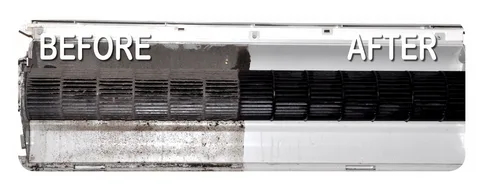
You might wonder: How do we know if dust is the problem?
Here are clear signs:
- Weak airflow from vents
- AC running longer than usual
- Bad smell from AC
- Dust coming out of vents
- Higher electricity bill
If you notice these signs, it’s time to take action.
How to Protect Your AC from Dust and Sand
Good news—you can reduce these problems with simple steps.
1. Clean or Replace Filters Regularly
Check filters every 2–4 weeks, especially during dusty months.
2. Schedule AC Maintenance
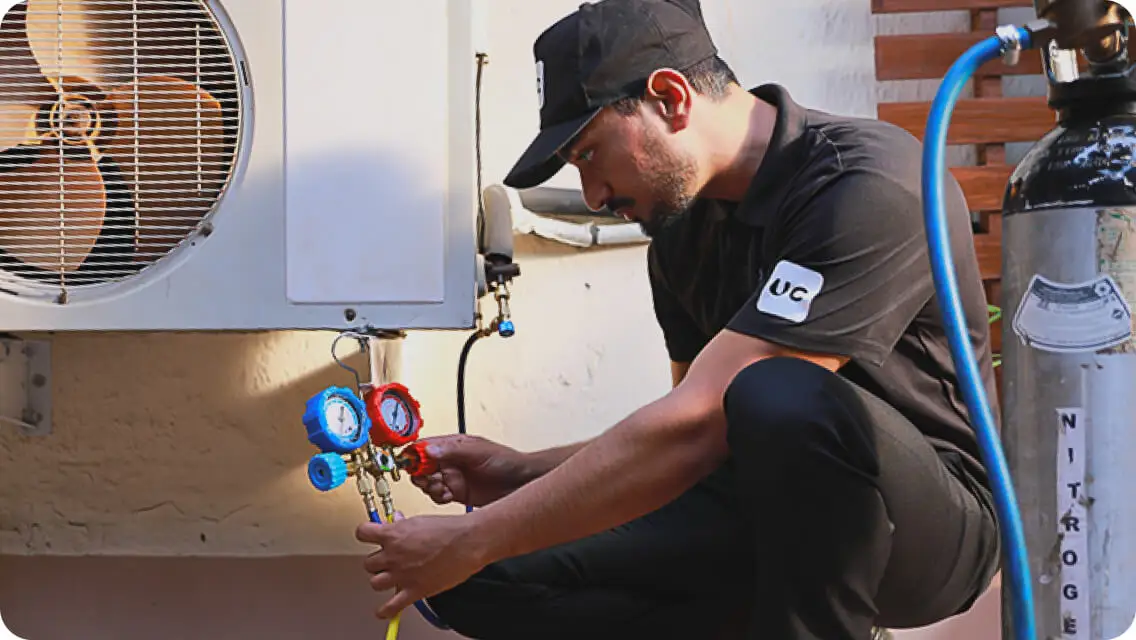
Regular servicing helps remove dust from coils and internal parts.
3. Keep Outdoor Unit Clean
Remove sand and debris from around the condenser.
4. Seal Windows and Doors
Less dust enters your home when gaps are sealed.
5. Install Air Purifiers
This helps reduce indoor dust levels.
Expert Advice
HVAC professionals recommend servicing AC units at least 2 times a year in dusty regions like Ajman. Another study from energy experts shows that regular AC maintenance can improve efficiency by up to 30%. So, simple care can make a big difference.
Why Regular Maintenance Matters
Skipping maintenance may seem harmless. But over time, dust buildup can lead to:
- Compressor failure
- Expensive repairs
- Shorter AC lifespan
Would you rather pay for cleaning or a full AC replacement? The choice is clear.
Final Thoughts
Dust and sand are part of daily life in Ajman. But they don’t have to ruin your comfort. Now we understand how dust and sand affect AC performance in Ajman:
- They block airflow
- They reduce cooling
- They increase energy use
With regular care and simple habits, we can keep our AC working smoothly.
FAQs
1. How often should we clean AC filters in Ajman?
Every 2–4 weeks due to high dust levels.
2. Can dust damage the AC compressor?
Yes, if coils are dirty, the compressor works harder and may fail.
3. Why is my AC blowing weak air?
Most likely due to clogged filters or dust in ducts.
4. Does dust increase electricity bills?
Yes, dirty systems use more energy.
5. Is AC duct cleaning necessary?
Yes, especially if you see dust from vents.
6. Can we clean AC coils ourselves?
Basic cleaning is possible, but deep cleaning needs a professional.
7. How does sand enter the AC system?
Through air intake and outdoor unit exposure.
8. What is the cost of ignoring AC maintenance?
Higher bills and expensive repairs later.
9. Does dust affect indoor air quality?
Yes, it can cause allergies and breathing issues.
10. How often should AC servicing be done?
At least twice a year in Ajman.
11. Can dirty filters cause AC freezing?
Yes, poor airflow can lead to ice formation.
12. What is the fastest way to improve AC performance?
Clean filters and schedule a full AC service